Skip to content

Shedding light on visual verification

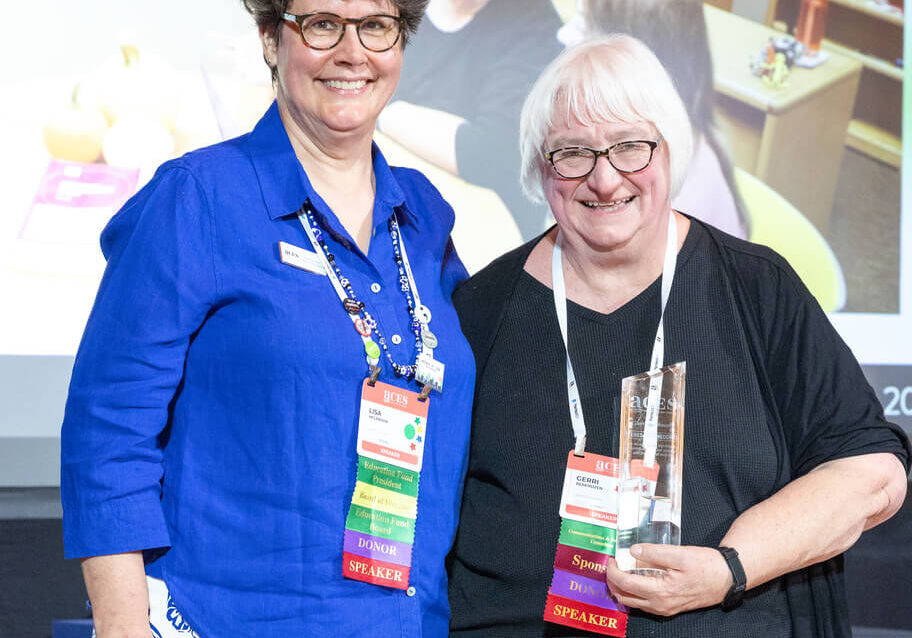
By Gerri Berendzen

How do you know that a photo is real?

That’s the questions Samaruddin Stewart, project lead at Verified Pixel and with the SPJ-Google News Lab, asked to start out the “Visual Verification” session at ACES 2016.

The answers varied from “I’d seen it before” to “it just didn’t look right.”

“Generally speaking, when you see pictures with sharks, they aren’t real,” Stewart said as a photo of subway sharks appeared on the screen.

But Stewart’s answer is that for a long time the answer really was that there wasn’t a good way to tell. But today many of the user-generated photos we see on social media and the internet can be run through a series of tests to tell if they are real.

The goal of his work is to make sure newsrooms know that free tools exist online to help verify images.

Image verification has three levels, he said. File tests look at JPG data and can be automated. Footprint tests look at the content. Flaw test look at things like lighting and geometry that may show a photo is altered. The level many newsrooms can use to verify photos is the File level.

Editors can start with image search like Tineye and Google Reverse Image search. Stewart recommends using both because they index photos in different ways. Tineye looks for the same image and will show you alterations. It also indexes photos in collections. Google Reverse Image looks for photos that are visually the same.

After using image searches, Stewart recommends looking for EXIF metadata. He suggested using Jeffrey’s Exif viewer as free online tool. It shows EXIF data (such as file size, type of camera, geocodes, etc.) and even shows the location in a Google map, so you can tell where the photo was really taken from. And it can be used with Google Earth Pro, which is also useful in determining if a photo was taken were it was purported to be taken.

“Most of these tools work best when they’re stacked on top of each other” to provide multiple types of tests for a photo, Stewart said.

They are free tools that help you make better informed decisions about the photos you see on social media or that are submitted to you, he said.

Another tool, izitru.com, looks at the file and runs tests to see if the photo has been altered.  And, finally, Stewart said, it’s important to analyze the sender of the photo with tools like Pipl, Email Sherlock and other people searches.

Stewart’s Verified Pixel project will allow people to send photos by email to the project, which will analyze those photos.

But Stewart acknowledges that these tools can’t do everything. There can be a real photo that doesn’t pass the tests and it doesn’t address  things like traditional cropping of  photos — which has always been around for  news photographers.

He said the goal is to apply some criteria to UGC content.

“I would hope that the same criteria used for professional news photographers is used for user-generated content,” Stewart said.
Well, now we’ve punned it. And described it. And headlined it.

Sep 28, 2026

ACES: The Society for Editing names the winners of its 2025-26 Headline Contest.

Read More

Six editors announced as recipients of the 2026 ACES Holden Diversity Fellowship

Sep 23, 2026

September 22, 2026 · By ACES Staff · ACES News Six talented editors have been selected as the seventh class of recipients of the Richard S. Holden Diversity Fellowship, a collaboration of ACES: The Society for Editing and the Dow Jones News Fund. This year’s fellows are Afia Agyapomaa Ofosu, Inez Woody, Jasmine Stole, Stephanie…

Read More

Readers respond more strongly to deeper editing, ACES study finds

Sep 15, 2026

Readers are more likely to notice and value editing when it improves how content is organized, understood, and experienced, according to a new study from ACES: The Society for Editing.

Read More

How to convince your boss to send you to an ACES conference

Aug 26, 2026

You know an ACES conference can leave you with new ideas, stronger skills, and fresh approaches to your work. But getting your boss to approve the investment may require showing how attending can benefit not only you but also your organization.

Read More

A new year for ACES: Reflections and what’s ahead

Jul 16, 2026

A new fiscal year is always a good moment to pause, look back at what we’ve built together, and look forward to what’s coming next. There’s a lot to say on both counts.

Read More

Words, people, and the privilege of serving ACES

Jul 16, 2026

I’ve told the story of my first ACES conference many, many times. Partially because it’s such a fond personal memory, but mostly because it shows how ACES brings editors together and helps them feel like they belong.

Read More

These are my people: Reflections on 30 years of ACES

Jul 8, 2026

ACES had been around for nine years when I first attended a national conference, in Cleveland. What I knew right away (and this has been said many times before) was that these are my people: people who care about the written word, people who care about getting it right for their readers, people who care about their craft and care about how their colleagues are contributing to the common goal of clarity.

Read More

Neil Holdway: A Legacy of Service to ACES

Apr 25, 2026

Neil Holdway has been part of the ACES Board for more than 20 years.

He joined in 2005 and served as treasurer, secretary, vice president, and treasurer of the ACES Education Fund. He was also the president of the ACES Board.

Read More

Nadia Geagea Pupa Wins the 2026 Robinson Prize, the Industry’s Highest Honor

Apr 25, 2026

ACES: The Society for Editing has awarded its 2026 Robinson Prize to Nadia Geagea Pupa.

Read More

Gerri Berendzen named ACES’ 2026 Glamann Award winner

Apr 25, 2026

The Board of Directors of ACES has awarded its 2026 Glamann Award to former ACES Board member and longtime news editor and teacher Gerri Berendzen.

Read More
Scroll To Top