AP announces stylebook changes; “healthcare” tops list
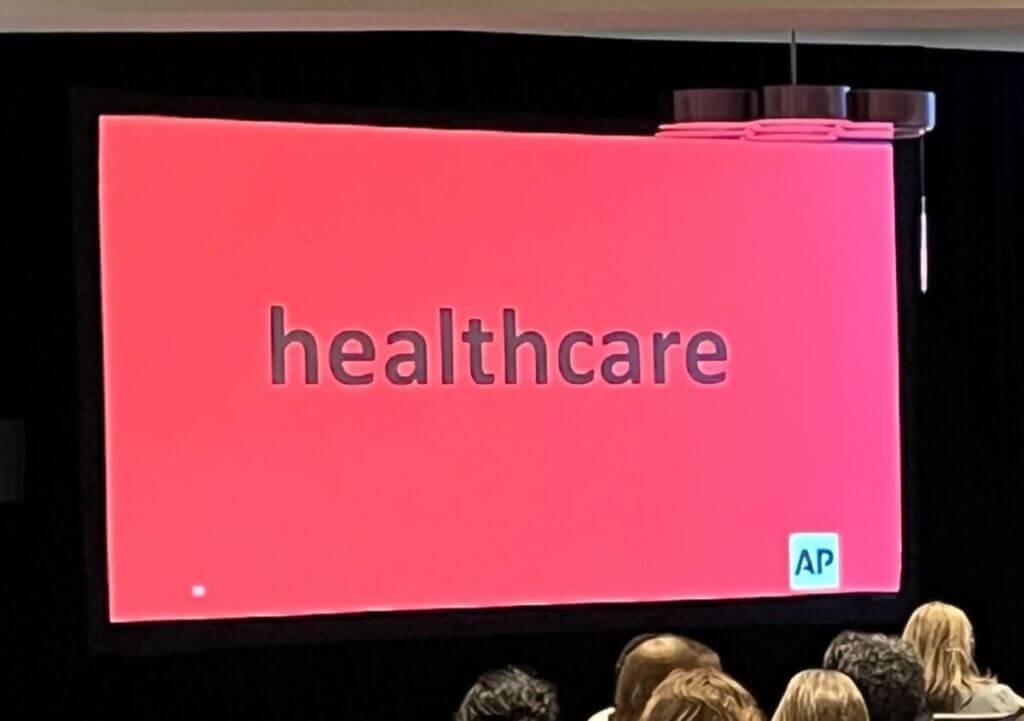
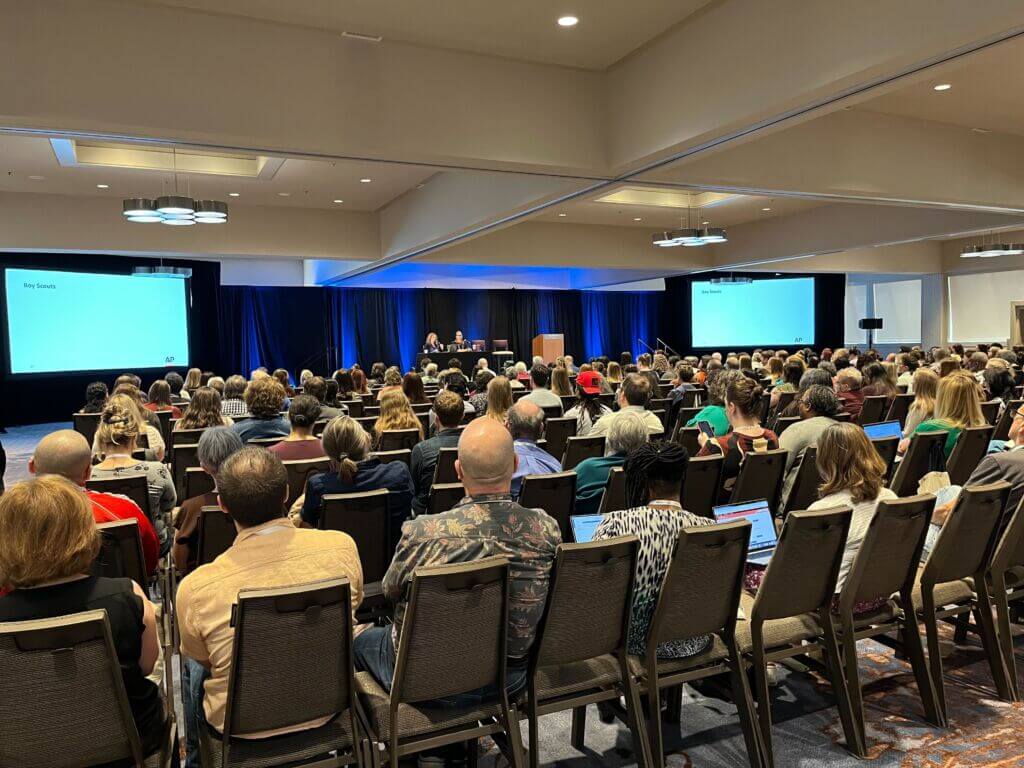
In past years at the AP Stylebook session at ACES: The Society for Editing’s conference, an attendee would invariably stand up during the Q&A and ask, “When are you going to make health care one word?”
Those questioners got their answer Friday at the 2026 ACES conference in Atlanta, when AP Stylebook editor Anna Jo Bratton announced that “healthcare” will now be listed as one word.
Bratton also announced that the 58th edition of the AP Stylebook, which will be available May 28, has added “Native Americans, Indigenous people/peoples” as a separate entry, revised the guidance for using the term “accident,” and changed the spelling in the entry for “dox, doxed and doxing” among other key updates.
Bratton noted in her presentation that questions about health care vs. healthcare are frequent on the stylebook’s online Ask the Editor section.
“The healthcare discussion has been going on for years,” Bratton said in an interview before the “What’s New in AP Style?” session. “For a long time, usage seemed mixed, and we usually don’t make a change unless the reasoning is overwhelming.”
She said the stylebook has heard a lot of good arguments for changing it over the years.
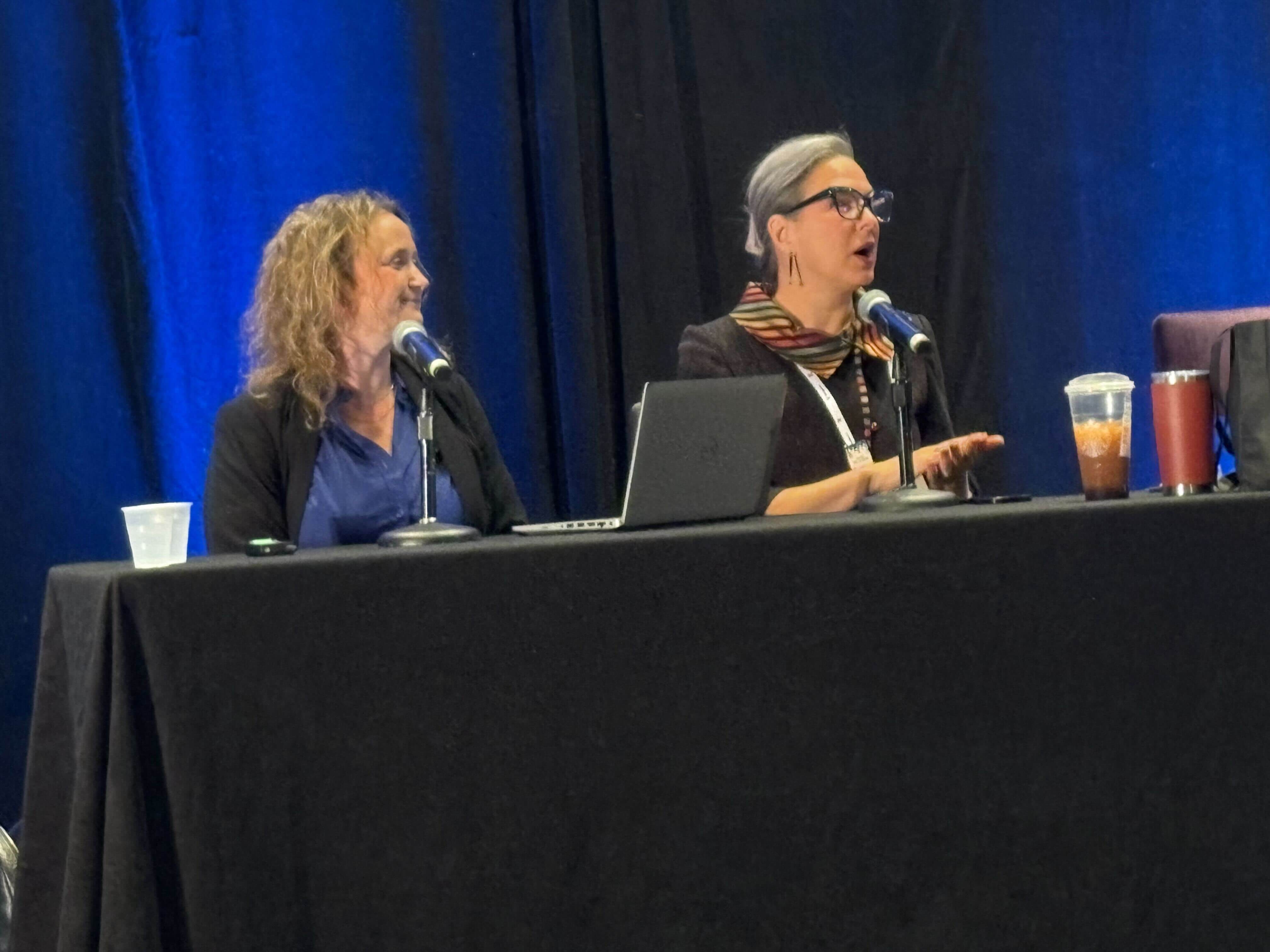
“With a new AP Stylebook Committee, we took it up again,” Bratton said. “Usage heavily tilts toward healthcare as one word, and we’ve heard all those out there in the healthcare industry, those who write about it, and others. We felt unanimously it was clearly the time to make the change.”
Feedback from users also weighed into other stylebook changes.
For instance, even though the stylebook had updated its guidance on punctuation in bulleted lists two years ago, Bratton announced a tweak on Friday.
Previous guidance said to use a period at the end of a sentence in a bulleted list but to use no punctuation at the end of a single word or phrase.

The tweak is to now advise that if bullet points are lengthy and form a complete sentence in combination with the introductory phrase before the colon, a period is acceptable.
“We have heard feedback on the bullet points,” Bratton said. “Usually, the guidance holds. If your bullet points are short phrases — cat videos, dognapping and horse shows — then still no period. But if your bullet points are so long that they make a complete sentence when combined with the leading word, we think a period at the end is more accurate to the way the list should be read.”
In the new entry on “accident, crash,” the stylebook now adds “when possible” guidance.
The entry now reads: “Generally acceptable for automobile, workplace and other accidents. When possible, use terms like crash or passenger train derailment to avoid the implication of blamelessness where negligence may be involved.”

“We didn’t consider liability in a legal sense. But we did consider responsibility,” Bratton said. “If a person’s actions lead them to causing a deadly car crash, it’s probably wrong to call it an accident. Same with gun deaths or injuries. It’s important to be honest, not just technically accurate.”
This year’s stylebook announcement was divided into categories, such as:
- Things we added or changed because of the news … such as entries for Iran war, invasion and assassination.
- Things we changed because the world changed … including entries on nobility, Taliban and the doxing entry.
- Sports changes … including entries for long shots and offside.
- Things we added or changed because they should’ve been that way in the first place (AKA your new Stylebook Committee’s pet peeves).
Addressing that last category in an email interview, Bratton said: “I have resisted strongly the urge to make the Stylebook’s agenda about my pet peeves. Our agenda is driven by what’s in the news, input from AP journalists and experts from elsewhere, watching common usage, and consulting with linguists and others.
“However. There is always room for guidance on ‘small’ things that could cause big embarrassment. If we can help others who struggle with ‘small’ rules, too, we can make the world a clearer place, one word at a time, right?”
The list of those “small” things included:
- “couple of” always means two
- kerfuffle not kerfluffle
- RSVP: It’s acceptable in all references.
- pet v. petted; In the past tense, use “petted” not “pet.”
WRONG: Yesterday, I pet the cat.
RIGHT: Yesterday, I petted the cat.
Bratton said the committee also took the Social Media Reporting chapter out of the stylebook, although it is still online. The reasoning was that it had useful tips and was vital when it was added in 2012. But since it debuted, a lot of the content has become common.
And a lot of chapters have been added to the AP Stylebook since 2012, so it was a good time to trim down something.
Other entries that were tweaked: the “woke” entry (woke is no longer called slang) and one on “initials” (or when to use them or not use them in people’s names, giving weight to the person’s preference).
Another update to the stylebook is an entry on “brand names.” It says to refer to events and venues by the name most familiar to readers.
The entry says: “When a company sponsors a sporting or other event identified only by the company’s name, use the name on the first reference: Buick Open, SoFi Stadium. However, when something is clearly identifiable without the company’s name, don’t include the full name unless the sponsor is relevant to the story: Fiesta Bowl, not the Vrbo Fiesta Bowl; Arrowhead Stadium, not GEHA Field at Arrowhead Stadium.”
In the category of “Things that changed because the world changed,” there’s also a revised entry on composition titles to note that video game names should be treated the same as books, movies and works of art.
Finally, Bratton mentioned things that haven’t changed: It’s “all right,” never “alright,” even though Merriam-Webster has an “alright” listing. And the AP Stylebook still recognizes the difference between compose and comprise.
Gerri Berendzen is a copy editor with more than 30 years of experience who teaches editing, writing and digital media at the University of Kansas School of Journalism and Mass Communications. She is a lifetime member of ACES: The Society for Editing.