5 tools & tips writers and editors can use to collaborate with designers
By Ashly Stewart
In the Feb. 18 ACES webcast, Ashly Stewart talked about the magic that happens when the right words and design work together to tell powerful stories.
But in the same way we’ve learned that the course of true love never did run smoothly, the path to writers, editors, and designers collaborating well can be filled with a little bit of conflict.
Thankfully, with the right tools and practices, the common creative conflicts that can arise between content producers and designers can result in some of your best ideas and content pieces yet.
Here are 5 tricks-of-the-trade writers and editors can use to successfully work with designers:
1. Learn each other’s language.
When it comes to creating a piece of content, whether it’s a print book with illustrations, an annual report with graphs, a website featuring images and videos, etc., they have to consider some of the same important features like:
- Space
- Accuracy
- Brand/author consistency
- Creative vision
Writers and designers simply use different vocabulary to talk about these things. Take space, for example. When creating an annual report, designers have to think of space in terms of the dimensions and specifications of the page (print or digital), so they’re constantly worried about how all of the elements have to work together on the page including things like images, logos, CTA buttons, and text.
Writers and editors have to think of space, too, but they usually think of it in terms of character and word counts. Writers and editors have to think about how many words or characters are either forced upon them (e.g. Twitter’s 280 character maximum) or that they set for themselves to tell their story and get their message across as clearly and powerfully as possible.
Here’s a list of other common terms that writers, editors, and designers should learn to help them understand each other’s work better and come up with creative solutions faster:
- Typography – Typography is the art of arranging letters and text in a way that makes the copy legible, clear, and visually appealing to the reader. Includes font type, color, size, etc.
- Display type – The decorative and/or big type utilized as visual elements or headlines in content pieces.
- Hierarchy – The way words and phrases are arranged to add emphasis and meaning. Includes headlines, headers, body copy, etc.
- White space – White space is the area between design elements. Despite its name, white space does not need to be white. It can be any color, texture, pattern, or even a background image.
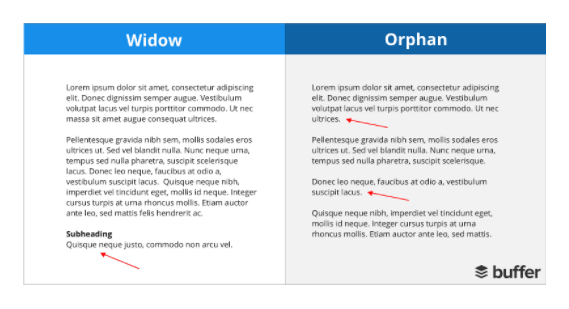
- Orphans/widows – There is some debate about the exact definitions of these terms but as a rule of thumb:
- Orphan: A is a single word or very short line that appears at the end of a paragraph or the beginning of a column or a page, separated from the rest of the text.
- Widow: A paragraph-ending line that falls at the beginning of the following page or column, thus separated from the rest of the text. Or the beginning of a new paragraph that starts at the bottom of a column or page.
To learn other important terms writers, editors, and designers can use for better collaboration, check out these quick glossaries from Buffer and Canva.
2. Lean on style and brand guides to act as a compass.
The reason writers and designers should always have a brand guide or style guide on hand is because it settles a lot of debates when it comes to how to best represent an author or brand.
The term “style guide” and “brand guide” are starting to be used interchangeably in the marketing world, but traditionally and in other industries, they’re still very separate.
A style guide is created with writers and editors in mind and includes sections that explain the voice and tone of a company or author, identifies the preferred writing style (Associated Press, Chicago Manual Style, etc.), and provides a glossary with entries that explain how a specific company or person uses specific writing elements. For example, an entry in a style guide might look something like this:
Emoji: A small digital image or icon used to express an idea, emotion, etc.
Company X doesn’t often use emojis in our ads, e-books, and other content pieces because it’s inconsistent with our brand, but we do allow the usage of emojis on our social media accounts.
A brand guide is created with designers in mind and serves the same purpose as a style guide. A good brand guide communicates how visuals are used to further a company’s unique brand and allows all creatives to be on the same page.
A brand guide indicates the correct type font and type colors to use, shows the appropriate use of a brand’s logo, and gives guidance on what type of visuals are preferred. For example, a brand guide may point out that Company X should promote images that convey positivity and light-heartedness and images that show people looking sad or forlorn should be avoided.
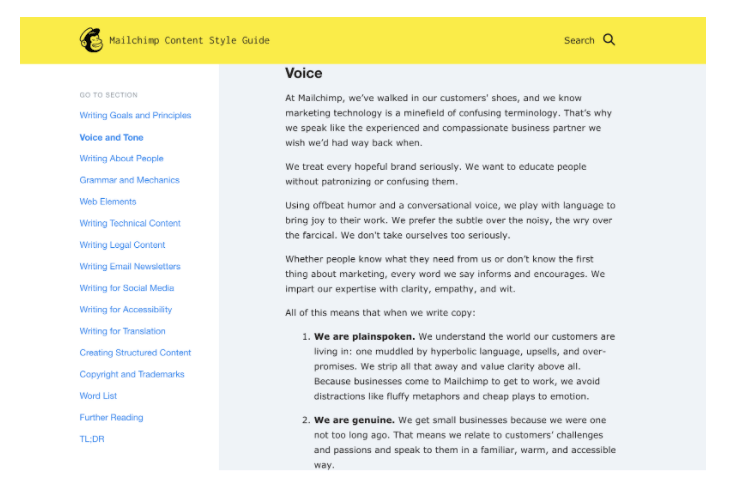
Does your client or department not have a style or brand guide? Offer to lead the charge and create one! It will give you exposure to leadership (CEO and CMOs are often involved in branding decisions), and it positions you as a strategic thinker and partner. If you’re a freelancer, offering to help a client develop a style guide sets you up for long-term partnership, and it’s an additional project.
If you’re looking for a good example of guides to use, I love Mailchimp’s style guide and Wolf Circle’s brand guide.
3. Use a creative brief to keep you on the same page.
Writers, editors, and designers have a reputation for not always being the most organized. This is why creative briefs exist.
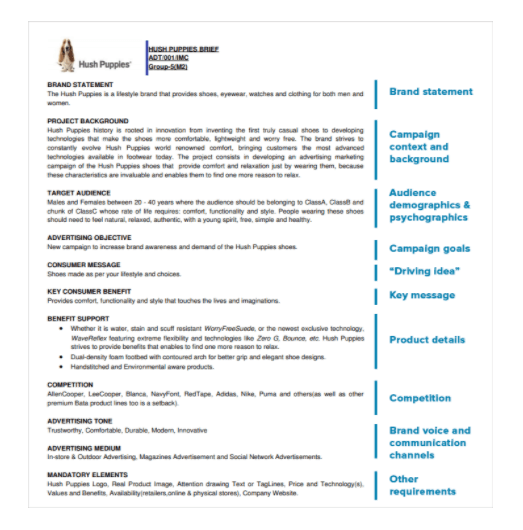
A creative brief, slightly different than a content brief, gives writers and designers all of the information they need to create a piece of content together. Like style and brand guides, a creative brief will look a little different depending on the company and the department.
But, by and large, these are some of the most important elements to include in a creative brief to arm writers, editors, and designers with the knowledge they need to collaborate well:
- Main objective of content piece
- Audience/buyer personas
- Phase of the marketing funnel
- Branding/Visual influences
- Search Engine Optimization (SEO) keywords
- Call-to-Action (CTA)
4. Communicate regularly.
Now that you’re starting to learn a little bit of design-speak, you can begin to develop a type of communication plan to use with a designer.
Here are some questions that writers, editors, and designers should ask each other at the beginning of a project to do their best work:
- What’s your communication preference? Email? Slack? Phone? Video? Other?
- Are there days or times that work best for you to connect?
- If we get feedback from clients or a big change in a project, do you prefer to process the information, then meet, or would you like to meet right away to process together?
- Do you like to use videos on calls?
- Do you have the capability to share your screen on calls?
Answering these questions will get you on the right track to a successful piece of content. The other important thing to think about is a meeting cadence that works for both of you. Here are some of the most important meetings writers, editors, and designers can have to plan together:
- A creative kick-off meeting: Use this to go through the creative brief together.
- A creative concepting/brainstorming session: Use this meeting to come up with a few strong creative themes you can start building your content piece around.
- Regular check-in meetings: These can be biweekly, weekly, or even daily depending on the timeline. Use it to go over each other’s progress and ask each other questions.
- Feedback meetings: Whether you’re a freelancer with clients or you’re part of an internal team presenting to stakeholders, you should bake in a few meetings to show your work to decision-makers to make sure you’re on track with the project’s objectives and creative vision.
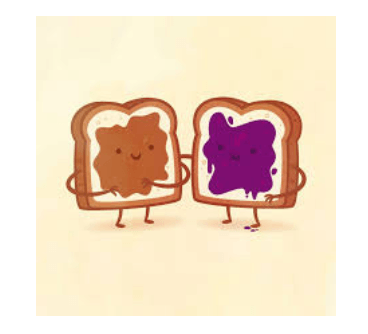
5. Be each other’s biggest cheerleaders and advocates.
Even though writers, editors, and designers can sometimes find themselves in the midst of some healthy, creative debates, it should be easy to be each other’s biggest supporters and allies.
One of the biggest things to keep in mind as writers and editors working with designers is that it’s not “you vs. them.” It’s you both vs. a problem. When clients or internal team members start to give feedback (maybe it’s productive, maybe it’s not) it can be tempting to start pointing fingers at each other.
“We went back-and-forth on that line, and they didn’t end up liking it. Now, we have to change everything,” the disgruntled designer may say.
“They liked the line, but they told us to stay away from that imagery. Now, they want to see more options,” the frustrated writer may think.
But, the truth is, creativity is subjective. A writer, editor, and designer can come up with a great idea and follow all of the guidance, and they still may receive negative feedback or requests for more options. That’s why it’s so important to get behind a shared vision and support one another. A united front is a strong one, and two brains are better than one.
Have questions? Reach out!
If you have questions about working with designers, feel free to reach out to the webcast presenter at ashlystewart@aceseditors.org.
And if you liked this webcast, check out our upcoming courses. March’s webcast is all about how to plan and edit content about technology. We hope to see you there.
If you missed this webcast, the recording is available in the ACES Academy.
Header photo by Daniel Fazio on Unsplash.