Diminish imposter syndrome by following the three “C’s” model
By Christine Steele
I have felt imposter syndrome (IS), also called imposter phenomenon, since I started my editing career more than 20 years ago. I always wondered why I had felt this way, because I thought I was a pretty good editor. I regularly attended ACES conferences to attend relevant workshops, read books on grammar and language, and made good catches that stopped the presses. And because of my skill, others had given me accolades and fun nicknames: Eagle Eyes Steele, the Oracle of Copyediting, and Cascading Style Sheets (an HTML term with initials that mirror mine).
Own your greatness
So what’s behind this phenomenon, and how do we conquer it? It’s a prevalent feeling among copy editors. In 2019, one article stated that in 62 different studies, up to 82% of people have experienced imposter syndrome.(1)
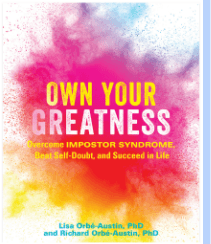
I’ve tried several tools over the years to help me, but I never felt they worked well. One book finally exposed the source of my feelings, and I had a breakthrough. “Own Your Greatness: Overcome Imposter Syndrome, Beat Self-Doubt, and Succeed in Life,” by Drs. Lisa Orbé-Austin and Richard Orbé-Austin, defines imposter syndrome as the experience of constantly feeling like a fraud, downplaying one’s accomplishments, and being concerned about being exposed as incompetent or incapable.
The book takes you through uncovering your origin story, identifying some triggers, and silencing negative thoughts. As a copy editor, I’m also a perfectionist (can you relate?), and the authors reiterate how this is a major barrier to self-care, something we should all value about ourselves. They even use a sample story of a copy editor! Overworking and perfectionism are important hallmarks of IS because we strive for unrealistic expectations and set unattainable goals. We then reach burnout and feel more of a fraud.
The three C’s model
To live your best life possible, the authors developed a three C’s strategy to overcoming imposter syndrome, and the book is divided into three phases: Clarify, Choose, and Create.
Phase 1, “Clarify” is where you identify your imposter syndrome origin story. When did you first become aware of your feelings? Was it in high school, college, or the professional workforce, or what about in childhood? Identifying your story means exploring possible connections with your family dynamics, including the messages communicated to you about your abilities and the development of your imposter syndrome.
As psychologists, the authors state this exploration will make you aware of how your IS came to be, pinpoint triggers, and end patterns of feeling fraudulent. Their research found that some origin stories included a high need to please others in the family, lack of support for a child’s unique experiences or skills, and anger and conflict not being well-managed in a family.
When one of the exercises helped me identify my triggers and why they existed, it was a major aha moment. I even said OMG out loud. I could see how those triggers allowed my feelings of inadequacy to creep in. The goal of this exercise was that by knowing my triggers, I could dismantle them and they would no longer have power over me.
Phase 2, “Choose,” involves changing your narrative by speaking your truth, silencing automatic negative thoughts, and valuing your self-care. Speaking your truth means admitting and sharing your thoughts and fears about your IS to only a few trusted people in your life. It also means owning your achievements and strengths, a key element to overcoming IS.
The worksheets in this phase help you identify your confidants and name hidden accomplishments you haven’t typically discussed or shared with anyone before. The authors recognize that it may not be comfortable for us to celebrate our achievements, but they encourage us to do the exercises because it’s a critical part of strengthening our confidence. Defeating imposter syndrome is a process, so doing each exercise helps you get closer to the truth.
Phase 3, “Create” focuses on developing a new reality for yourself and experimenting with different roles. You build your “Dream Team” of supporters and mentors who are positive for you to be around. You also identify your imposter roles, the ones you are more likely to play as a result of your imposter syndrome. Mine are helper, superwoman, and knowledge hub. When I have taken on these roles, and I have often enjoyed them, I didn’t realize how much I contributed to my own burnout. I couldn’t keep up with normal duties and those fraudulent feelings came back.
In this phase, you are given some new roles to experiment with such as “help seeker” instead of helper. The authors confirm that we can often feel like we should do things without help and are reluctant to develop a community of supporters. But the benefits of these new roles increase our sense of closeness, expose us to unexpected opportunities, and expand our sense of self and what we are capable of personally and professionally.
A revealing study
Imposter syndrome goes back to the 1970s when two psychologists at Georgia State University observed it in women who were accomplished, both students and faculty. The book mentions the 1978 study and that the psychologists coined the term “imposter phenomenon.”(2) Just like “Own Your Greatness,” the study confirmed that certain early family dynamics and later societal stereotyping appeared to have significantly contributed to the development of IS. Men were also affected but with much less frequency and intensity.
Don’t be silent anymore
If we share our “well-guarded secret,” as the study referred to it, others are willing to share theirs too. We are not criticized but instead astonished and relieved that we aren’t alone. Both Drs. Orbé-Austin remind us that there will be points along our path where we are going to hit roadblocks, but that is when we choose to no longer be silenced or marginalized by our own imposter syndrome. We will use our coping strategies, reach out to our Dream Team, and remember that we have the knowledge and skills to meet the challenges that come before us. Join me in owning our greatness!
If you’re ready to begin conquering your IS, start by visiting the book publisher’s website where you can download the first 15 pages for free, including the table of contents.
—–
1. Bravata, D.M., Watts, S.A., Keefer, A.L. et al. “Prevalence, Predictors, and Treatment of Impostor Syndrome: A Systematic Review.” Journal of General Internal Medicine 35, 1252–1275 (2020). https://www.ncbi.nlm.nih.gov/pmc/articles/PMC7174434/
2. Clance, P. R., & Imes, S. A. (1978). “The Imposter Phenomenon in High Achieving Women: Dynamics and Therapeutic Intervention. Psychotherapy: Theory, Research & Practice, 15(3), 241–247. https://www.paulineroseclance….
Header photo by Eric Brehm on Unsplash.