New handbook fills training gap in verifying user-generated content
By Gerri Berendzen
Verifying information has always been one part of the copy editor’s job. But in the digital era, the amount of information flowing across your desk has increased while the time between getting it and publishing it has shrunk.
When you throw in an emergency and social media, gathering and editing news can become a fairly dicey proposition.
Now, journalists have a new resource to help them deal with verifying user-generated content. The Verification Handbook is a free Web-based book that offers tools and techniques for turning crowd-sourced information into credible and timely news content.
The Verification Handbook was funded by the European Journalism Centre and edited by Craig Silverman, founder and editor of “Regret the Error,” a Poynter Institute blog about media errors and accuracy.
American Copy Editors Society member and Education Fund president Merrill Perlman served as copy editor for the book.
The book can be read online, and epub, PDF, and printed versions will be available in the future.
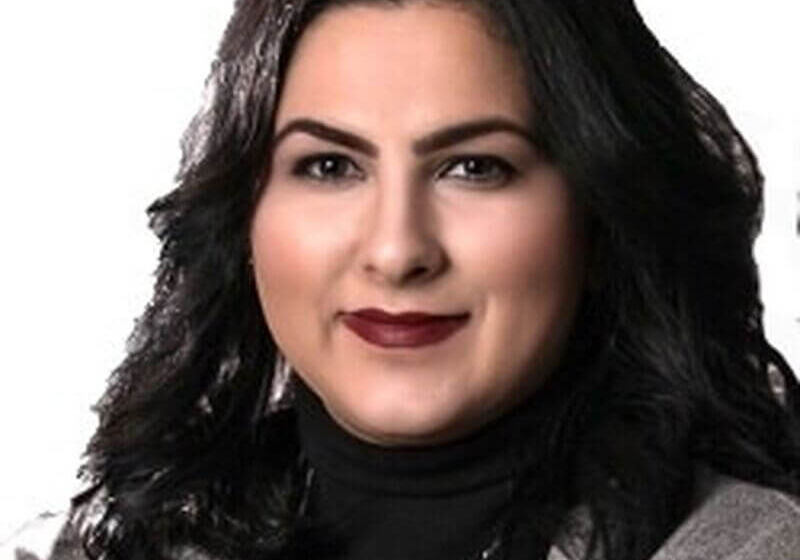
Silverman recently answered some questions about the book.
Q: What was the impetus for creating the Verification Handbook?
Silverman: Ask any journalist about the fundamentals of what we do and you’re bound to hear some mention of accuracy. The problem is, so many of us have never received formal training in verification — especially not as it relates to the astounding amount of information being created and shared in the networked world.
How do you verify a Twitter account? An image? Video? How can you tell if content has been manipulated, or track down the original source of a piece of content or information you spot online?
There is a real need to spread these skills so that all of us can help push out quality, accurate information rather than bunk. So the handbook is about offering a free, useful guide to everyone.
Q: What audiences is it aimed at?
Silverman: It’s focused on two core audiences, but they are by no means the only people who can benefit from reading the handbook. The target groups are journalists and aid/humanitarian workers. This is because the handbook has a particular focus on helping people verify information in emergency/disaster situations. It also has some overlap with general breaking news situations.
Q: Do you have any advice for journalists — and copy editors in particular — about how to make best use of the handbook?
Silverman: Of course, I’d suggest that reading the whole thing is a good place to start! But this handbook is a resource that can be consulted any time a specific verification challenge pops up. The case studies may provide a path to verification for a particularly challenging example, while a chapter can provide the fundamentals.
If people are pressed for time, I suggest starting with Steve Buttry’s chapter as a reminder of the fundamentals, and Claire Wardle’s look at verifying user-generated content. Then, read whichever chapter is most relevant to your daily work. Do you deal with images? Video, etc. Pick the chapter that suits you most for your daily work.
But do keep it handy. There is a lot to learn from, and it’s a great resource to keep close by.
Q: The list of verification tools looks like something all journalists should bookmark. Do you plan to continually update that section?
Silverman: The list of tools is one key part of the book that will need to move with the times. I’m committed to keeping it current and will needle our very talented contributors to help me do that. Really, though, it’s a wonderful thing to realize there will be many new tools coming out that can help. This is a good thing!
Q: Was it an easy decision to offer the handbook to all free?
Silverman: It was! The good folks at the European Journalism Centre did all of the legwork to ensure there was funding in place to make this a free resource. That’s one of the best aspects of this project, as it’s so important for these skills and resources to be freely available. There is a sense of mission to getting the handbook produced, and that’s evidenced by all of the people and organizations who pitched in to make it happen.
We all know this can be tremendously helpful to journalists, aid workers, and anyone who wants to consume information with a skeptical eye.